
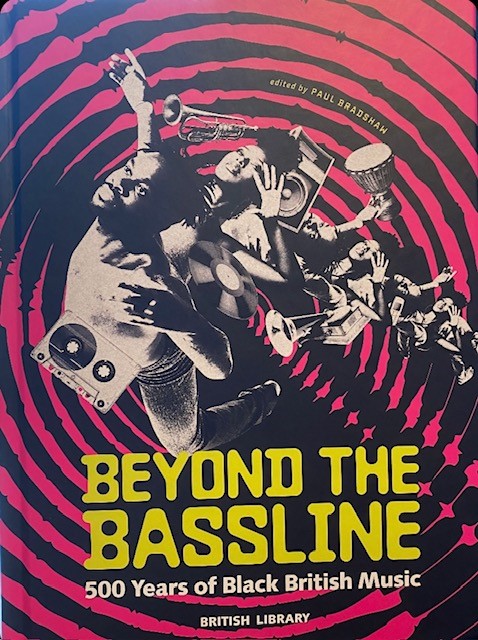
It’s relatively easy to take a view on the influence and development of Black British music as directly beginning with HMT Windrush. But whilst it can’t be argued that the influx of West Indian immigrants in the 1950’s began a process of cultural exchange which the effects of have been felt profoundly in the modern-day nation, that single event was far from the story’s actual origin.
Appropriately however, the voices of those who became known collectively as the Windrush generation – a phrase which in more recent times has been tarnished with more negative connotations – and their descendants feature prominently in Beyond the Bassline: 500 Years of Black British Music. This new collection of specially commissioned narratives was compiled and edited by Paul Bradshaw, himself the editor of the independent magazine Straight No Chaser.
Bradshaw admits though in his foreword that the task of giving space to anything like a representative group of writers, producers, poets and performers to cover the enormous span of this history is an impossible one. Instead, presented in loosely chronological order are more than fifty features, interviews, essays and poems which reveal a timeline of how Black British musicians of all kinds have shaped the past, present and future of our greatest global export.
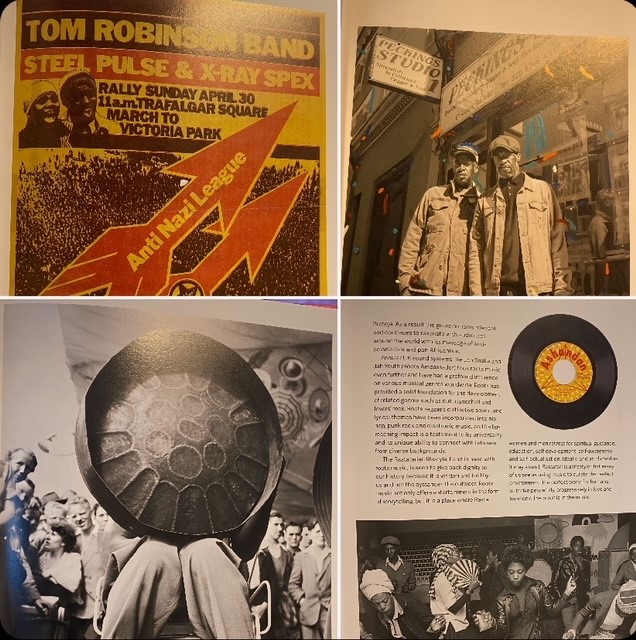
The focus throughout remains on storytelling, the early subjects in most cases now forgotten, if they were ever acknowledged to a wider public at all.
Many of these characters are deserving of what is at last appropriate recognition. In this gallery include Billy Waters, the one-legged former sailor who brought African-American music to London’s Strand in the early nineteenth century, or Ken ‘Snakehips’ Johnson, whose West Indian Dance Orchestra entertained the capital’s fashionistas during world war two, before he was tragically killed during an air raid while performing.
Music is of course the common thread which binds; one of the most fascinating chapters is dedicated to the evolution of the steel pan movement from its origins via the Trinidad All Steel Percussion Orchestra (TASPO), who first met the public at the 1951 Festival of Britain. Fast forward to now and by way of their legacy no fewer than sixteen steel bands played 2023’s Notting Hill Carnival.
Perhaps unsurprisingly much of the latter part of that century is mapped out here against a pattern of constant oppression by a society which rarely saw its true nature reflected back at it. Out of this strife though communities bonded even more tightly and refused to be intimidated; covered here, both Rock Against Racism and Coventry’s multiracial 2-Tone label were in the vanguard of what progress was possible.
Latterly the faces and names emerge out of a more familiar context, from the global explosion of Black artists that began in the 80’s and 90’s – Sade, Massive Attack, Soul II Soul – to chronicling the rise of ostensibly underground movements such as UK garage, drum and bass, afrobeat and drill.
Lavishly illustrated, Beyond the Bassline is the companion to a major British Library exhibition of the same name and is both a celebration of Black British music and a fascinating, vibrant look at what remains a constantly evolving history. The next chapters are already being written.
Beyond the Bassline: 500 Years of Black British Music is published by British Library and available now, £35.

 The Voice Of Unreason