
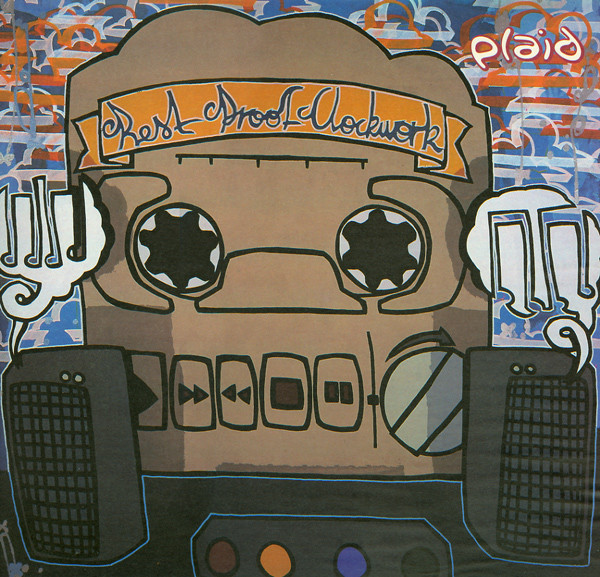
From The Archives – Originally released 16.05.1999. Review originally published in 2009 but this version is significantly amended.
At times, even the most committed fans of ambient/electronica/IDM call-it-what-you-will – such as the author of this review – are as exasperated by its exclusionist outlook as those who are serially turned off by it.
There’s the endless stream of pseudonyms. A tendency to rarely give interviews. A general reluctance to play live. These and many other more trivial features can leave a frustrating vacuum both around artists and music, one that fuels the idea it’s some kind of perpetual in-joke you’re never meant to understand.
The antidote is contained in records like Rest Proof Clockwork, Ed Handley and Andy Turner’s second outing as Plaid after the mysterious dissolution of the much-loved Black Dog Productions. Whereas their former imprint was at the unintentional forefront of the “intelligent” techno movement at the beginning of the nineties, they chose to reject the notion of structural identity. Describing BDP in interview as “A collective…never a band” following the split with co-collaborator Ken Downie they simply gave a new aspect Plaid, a previous recording identity.
Ostensibly this was no revolutionary step from their first post-Dog album Not for Threes. Still working with the glacially cool Warp label, the self-confessed former hip-hip devotees – who’d begun making music after failing to connect with the tribal hedonism of rave – continued to plough their own gloriously idiosyncratic furrow. Rejecting wholesale the stylistic maxims of the era (Anodyne chill out, big beat and pummelling trance) they also ignored the received wisdom that dance music was to be danced to, particularly brave in the most popular era for club orientated noise since disco.
Freeing their minds from that belief opened a world of structural possibility. It’s an awful cliche, but technology here had rarely sounded so human; Opener Shackbu took the shape of a jazz workout, with a hardworking (Virtual) snare, what sounds like a kid’s TV sample being scratched to oblivion and a dolphin-playful sense of fun.
At its/their best, BDP weaved melodies so immaculately pitch-perfect that they achieved a weird sort of transcendence, like playful dots., but Rest Proof Clockwork‘s most invigorating peak is a partial eclipse of even those moments. This blissful apex comes via Ralome, mellifluously threaded around the slightest of guitar phases, the sequence of bell-like chord progressions and deft layering of intertwining threads offer a brief, deep sense of mental escape.
If that represents a kind of piquant laptop folk, there is also plenty for those who expected to hear something which might be labelled techno, both Last Remembered Thing and Dang Spot serving the purists with beats and bleeps in equal measure. This represents the exception however rather than the rule. Seemingly determined to give any track sequencer nightmares, the duo’s hip-hop influence shows itself again on Little People, which revolves around a hyperactive metallic clack and a wodge of scratched samples. There’s even room for a discernibly Latin twist in the form of the lilting Piano Promo.
Diverse and thematic, Rest Proof Clockwork sounds like a movement in eighteen parts, sophisticated after-hours cocktail dribble one minute and the incidental music for a wildlife programme the next. There’s no need for labels when the ear-buzz is as good as this.


